You can have the best product ever made in the world, but if your design doesn’t communicate that, customers may never give you a chance.
Whether it’s your logo design, website, or Facebook ad, good design influences everything – whether you capture their attention, whether you look credible enough for them to try, down to what brand identity they’ll perceive from your brand.
That’s why choosing the right designer to execute your creative vision is such an important decision. But with thousands of freelancers offering different styles, prices, and levels of experience, knowing which one to hire isn't always easy.
Fortunately, there are practical ways to narrow down your options. This guide walks you through how to evaluate designers, compare portfolios, write a better design brief, and decide whether a one-to-one hire or a design contest is the right fit for your project.
Start With Your Brand, Not the Designer
One of the biggest mistakes businesses make happens before they even look at a portfolio.
It’s by hiring without even fully understanding their own brand identity.
Think about it this way. If you aren't sure how you want your business to be perceived, how can you expect a designer to create something that captures it?
For example, you know you need to hire a graphic designer to create a logo. But that's only the beginning. Should it feel bold and energetic or refined and elegant? Should it be modern and minimal, or handcrafted and rustic? Is your goal to stand out from competitors, appeal to a younger audience, or reinforce your reputation as an established business?
Starting a project without any clear direction is a big no-no. Spend a few minutes answering questions like these first:
- What does my business do, and what makes it different from competitors?
- Who are my ideal customers?
- How do I want people to describe my brand in three to five words?
- What emotions do I want customers to feel when they see my brand?
- What brands do I admire, and what specifically do I like about their design?
- Are there any visual styles that definitely don't fit my business?
- Am I trying to modernize my brand, create something timeless, or build something completely unique?
You don't need to have all the answers. In fact, part of a designer's job is helping you refine your ideas. But the more clearly you understand your business and the image you want to project, the easier it becomes to recognize the designer who's the right fit.
After all, you're not just hiring someone to make something look good. You're hiring someone to visually represent your business, and that starts with understanding what your business stands for.
How to Write a Design Brief That Attracts Better Designers
A design brief that clearly explains your business, target audience, project goals, brand personality, preferred style, budget, timeline, and required deliverables is often the best way to get more quality designers to apply.
Here are two briefs for example:
Brief A:
"Need a bakery logo ASAP."
Vs.
Brief B:
“We need a logo for a family-owned bakery located in Melbourne. Most customers are young families and office workers. We want to feel welcoming rather than premium. The logo will appear on takeaway boxes, storefront signage, coffee cups, and social media. We'd like warm colors and simple illustrations but want to avoid anything that feels overly vintage.”
See the difference? The first brief is too vague. What kind of bakery? And do you want modern, minimalist, playful, or cozy logos? Designers will interpret that based on their own preferences, so you will end up with designs that don’t exactly fit what you are looking for.
Compare that to the second one. It gives designers all the info they need – the right sizing, the colors you want, the art style to do and to avoid, etc. - so what you get is usually close to what you want.
Don’t make people guess. Give them the right information right from the start so they can spend their time actually doing the work you want.
Here is a simple design brief template that you can use:
- A short description of your business
- Your target audience
- Your project goal
- Where the design will be used
- Existing brand guidelines (if there is one)
- Colors, fonts, or visual styles you want to include or avoid
- Required file formats
- Print specifications (if needed)
- Budget
- Timeline
- If it’s a one-off or long-term project
Here is also a pro tip: explain why you like or dislike certain things.
Don't just say, "I like Apple's branding." Instead, say "I like how Apple’s branding looks clean and uncluttered," since that tells designers what you're actually responding to.
How Do You Choose the Right Designer for Your Project?
The right graphic designer for your project should have relevant experience, strong communication skills, positive reviews, and a portfolio that demonstrates clear problem-solving rather than just attractive visuals.

Let’s break it down below:
Relevant experience
It may seem obvious, but someone who worked in your industry, is an expert in the design type you are looking for, or has the same aesthetic, is often the best match for you.
Let’s say you’re looking to build a website for a law firm. You should ideally search for:
- Someone who’s done websites for law firms
- Someone who’s done websites for other corporate industries, like consulting firms, financial organizations, tech companies, etc.
- Someone with experience designing clean, corporate, and conversion-focused websites (even if they're from a different industry)
In that order of priority. Because the more relevant their experience is, the less time you'll spend explaining industry-specific expectations, and the more likely they are to anticipate challenges before they become problems.
Someone who does colorful, creative, and playful websites make seem like a cool designer to have, but they may have a difficult time tempering their style to fit more straight-laced industries, so they aren’t a great fit exactly.
It’s also important that you find someone who can actually create the design you are looking for. If you need a website, look for a website designer. Don’t expect a logo specialist to build you the website, even if they may have experience in designing for law firms. Designers have specialties, and specific designs usually need specific skill sets.
Strong communication skills
Design projects rarely end with you giving them the project brief. You have to discuss the project, agree on the contract, have revisions, and potentially brainstorm on some other improvements.
That's why communication skills matter just as much as creativity.
Look for someone who:
- Ask thoughtful questions instead of making assumptions
- Clarify your requirements before they start working
- Can explain the reasoning behind their design decisions
- Respond within a reasonable timeframe
- Are open to feedback and revisions
A great communicator often leads to better results than choosing someone with a slightly stronger portfolio but poor communication.
Positive reviews
Reviews tell you what it's actually like to work with the designer.
Don’t just look for who has a lot of five-star ratings or whatnot. Take a few minutes to actually read what previous clients are saying. This should give you a better idea of the personality and work ethic of the designer you are working for.
Look for comments about things like:
- Meeting deadlines
- Clear communication
- Being easy to work with
- Taking feedback well
- Delivering work that matched the original brief
These are universally great qualities that would make working together a breeze.
It’s also worth paying attention to their working style to see if it matches yours. Do you prefer someone who follows your brief to the T? Or are you more laidback and want the designer to freely put their own input? Neither is necessarily better than the other, it’s just about finding someone who is a better match for your own personality.
It's also worth looking for patterns rather than focusing on a single review. A single one-star review could simply be from a disgruntled client, just as one five-star review doesn't guarantee a perfect experience. Instead, look for comments that come up repeatedly, as they are usually a better indicator of what you can expect.
Great portfolio
A portfolio is one of the best ways to evaluate a designer. But don't just choose someone simply because the work looks cool or beautiful.
Instead, look for evidence that they understand the client's goals and can tailor their work accordingly. For example, if they designed branding for a luxury hotel, do the colors, typography, and imagery actually feel premium and sophisticated? If they created a website for a children's daycare, does it feel warm, approachable, and easy for busy parents to navigate?
Some designers also include project descriptions explaining the brief, the challenges they faced, and the reasoning behind their design decisions. This gives you valuable insight into how they think, that they're making intentional choices that support the client's objectives instead of just thinking aesthetically.
The strongest portfolios go one step further by showing the impact of the work. For example, a website redesign may have increased conversions, new packaging may have boosted product sales, or a series of Instagram Reels may have improved customer engagement.
Not every designer can share these results (especially since most are under confidentiality agreements), but when they do, it's a strong sign that their designs deliver actual results.
How Do You Evaluate a Graphic Designer's Portfolio?
As we discussed in the previous section, a great portfolio should demonstrate relevant experience, thoughtful design decisions, and, when possible, real business results.
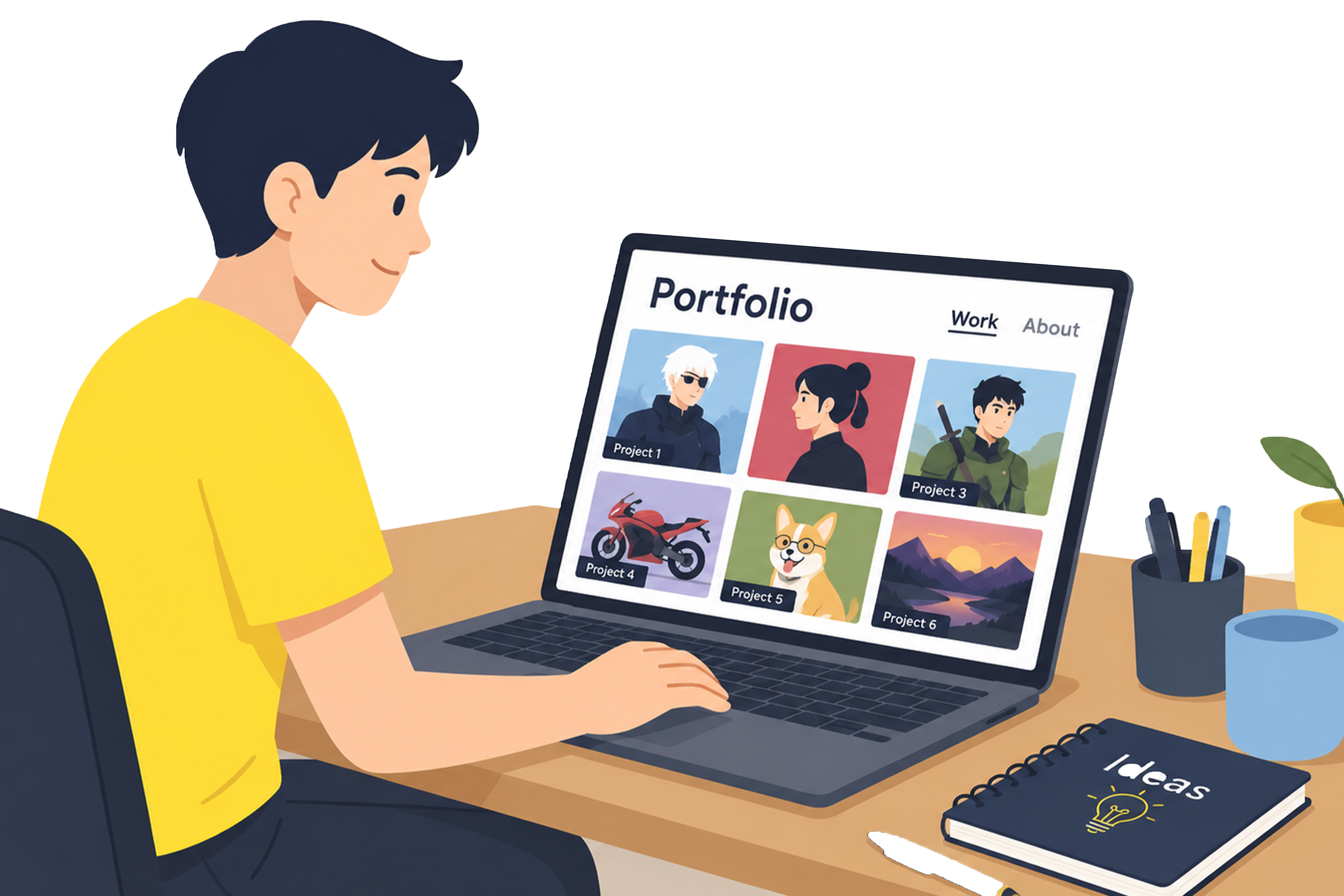
Then here are a few more things you can look at before making your final decision:
- Don't be fooled by beautiful mockups: Mockups can make almost any design look fantastic since they are usually displayed with the best lighting and angle. Try to zoom in on the actual design and ask yourself whether it would still work without the fancy presentation. If possible, look for the design in its real-world setting instead (visit the live website, browse the brand's social media, or see how the packaging looks on an actual product) as it’s a much better way to judge whether the design works IRL.
- Look for consistency, not one masterpiece: Almost every designer has one standout project, but is that a one-off, or are they actually good? Browse ten or fifteen projects and see whether the quality stays consistently high. Strong designers produce good work repeatedly, not just once.
- Look for flexibility: Every designer has their own style, but the best ones know how to adapt it to different clients. If every project looks almost identical despite being for different businesses, ask yourself whether they'll be able to create something that feels unique to your brand instead of simply repeating their signature style.
- Focus on the work that's relevant to your project: Many designers showcase different types of work in one portfolio, from logos to packaging to social media graphics. If you're hiring someone to design a business card, spend most of your time reviewing their business card projects rather than getting distracted by an impressive logo or poster. Always evaluate the work that's most relevant to what you're actually hiring them to do.
- Check how recent the work is: Finally, look at how current the portfolio is. If the designer's strongest projects are several years old, it may be worth asking if their skills are still up to par. You should also check whether they still work on similar projects to yours regularly, since it means they are still up to date with industry and design standards.
What Questions Should You Ask Before Hiring a Designer?
Before you hire a designer, ask about their experience with similar projects, design process, expected timeline, revision policy, and pricing. These questions help you understand how they work, set clear expectations, and determine whether they're the right fit for your project, budget, and long-term goals.
Let’s break down the questions to see why they are worth asking:
Have you worked on similar projects before?
Someone who has done the exact same work that you need is great, but the chances of that are slim. So the next best choice is someone who tackled similar tasks.
What you should look for are examples of comparable work. Whether its adjacent industries, the same design type (ex. someone who has done brochures, if you are looking for brochures), or the same aesthetic (ex. someone who has done unconventional typography works).
Ask them to also explain the client's goals. This gives you a better sense of whether they understand the audience you're trying to reach and the problems you're trying to solve.
Can you walk me through your design process?
Every designer has a different way of working.
Some begin with research and competitor analysis, while others start by sketching concepts before moving into digital mockups. Understanding their process helps you know what to expect and gives you confidence that there's a clear plan behind the project.
How do you handle feedback and revisions?
Ask how many revision rounds are included, what’s the best way to communicate (ex. if it’s through emails, or should you have a Zoom meeting to discuss), how they handle feedback, and what happens if additional changes are needed after the project is marked complete.
Revisions are a normal part of every design project, so it's worth discussing them upfront. Their answers can also give you an insight on their communication style – how responsive they are, how well they can articulate their thoughts, and whether they embrace feedback as part of the creative process instead of taking it personally.
What will I receive when the project is finished?
The final deliverables can vary depending on the project.
For example, a logo project may include vector files, PNGs, JPGs, and brand guidelines, while a website project might include design files, assets, and developer handoff documents.
Knowing exactly what you're receiving ensures there are no surprises once the project is complete.
What is the expected timeline?
Ask when you can expect to receive the first concepts, how long revisions usually take, and when the final files will be delivered.
Having a clear timeline helps you plan product launches, marketing campaigns, or website launches more effectively.
What's included in the quoted price?
A lower quote isn't always the better deal if it excludes important deliverables.
Clarify whether the price includes research, multiple concepts, revision rounds, source files, commercial usage rights, or any additional services. Comparing what's included (not just the price itself!) gives you a much clearer picture of the overall value.
It’s also best to ask if they offer any packages or bundles, as it may save you more money in the long run.
Should You Hire a Freelance Designer or Use a Design Contest?
A freelance designer is usually the better choice if you already have a clear creative direction or need ongoing design support. A design contest works best when you're exploring ideas and want to compare different creative approaches before choosing a final direction. The right option depends on how well-defined your project already is.
There’s no “better” option between the two of them. They just solve different problems.
Let’s say you're launching a completely new coffee shop. You know you want a logo, but you're not sure whether your brand should feel rustic, minimalist, vintage, or premium. Rather than committing to one designer and one creative direction, a contest lets multiple designers interpret your brief in their own way. You can discover ideas you hadn't even considered (what if a more playful and loud aesthetic suits you?).
But if you already know that you want a rustic and cozy-style logo, it’s best to hire a designer that has the same aesthetic. It’s less work that way, since you won’t have to review submissions that don’t necessarily fit the bill.
You can also combine both approaches.
For example, you might launch a logo contest on DesignCrowd to explore different branding directions. Once you've chosen a winning design, you can continue working one-to-one with that same designer on business cards, packaging, social media graphics, or future marketing materials.
That way, you get the creative variety of a contest while still building a long-term relationship with a designer who already understands your brand.
How Much Should You Pay a Freelance Designer?
The cost of hiring a freelance designer depends on the scope of your project, its importance to your business, and the designer's level of experience.
For example, creating a single flyer for an upcoming event is very different from building an entire brand identity with a logo, color palette, typography, brand guidelines, and marketing assets. The latter requires more research, creative exploration, and time, so it'll naturally cost more.
It's also worth considering how important the project is to your business. A logo or website represents your brand for years, making it worth investing in an experienced designer. On the other hand, one Instagram Story promoting a weekend sale is much shorter-lived and usually doesn't require the same level of investment.
Finally, experience plays a major role in pricing. A designer who's completed hundreds of successful projects and built a strong reputation will generally charge more than someone who's just starting out with only a handful of portfolio pieces.
The goal isn't to find the lowest price. It's to pay an amount that's appropriate for the importance and complexity of your project while working with a designer who has the experience to deliver the results you need.
Common Mistakes When Hiring a Designer
Common hiring mistakes include prioritizing speed or price over quality, expecting one designer to handle every creative task, giving vague feedback, and changing the project scope halfway through. Avoiding these mistakes helps projects run more smoothly and leads to better creative outcomes.
Here are some of the biggest mistakes businesses make when hiring a designer:
- Prioritizing speed over quality: Good design takes time. Rushing the process often leads to weaker concepts, more revisions, and results that don't fully meet your goals.
- Choosing the cheapest designer without considering experience: Saving money can be tempting, but an experienced designer often delivers stronger work with fewer revisions (which is exactly why they cost more!). You don’t want to cheap out with a newbie only to end up redoing everything down the line.
- Expecting one designer to do everything: A logo designer isn't necessarily a website developer, copywriter, illustrator, or video editor. Make sure the designer's skills match the work you actually need.
- Giving vague feedback: Comments like "Make it pop" or "I'm not feeling it" don't give designers enough direction. A better feedback is “The text on the website header is not readable when paired with this background color,” since the designer can easily make meaningful improvements.
- Changing the brief halfway through: Adding new requirements after the project has started can affect timelines, pricing, and the overall direction of the work. Agree on the scope upfront and discuss any major changes before moving forward.
Final Thoughts
Choosing the right designer isn't about finding someone with the flashiest portfolio. It's about finding someone who understands your business, communicates well, and has the skills to solve the specific challenge you're facing.
Whether you decide to hire a graphic designer or launch a design contest, taking the time to follow our tips above can significantly improve your chances of getting creative work you'll be proud to use.
Ready to get started? DesignCrowd lets you hire experienced freelance designers directly or launch a design contest to receive ideas from creatives around the world, so make sure to check that out. If you're still researching, feel free to explore the DesignCrowd blog for more practical tips on logo making, branding, and hiring creative talent.
Till next time!
Faviola Publico is an SEO Content Writer specializing in branding and digital marketing strategies. Outside of work, she enjoys reading slice-of-life novels and watching any mystery thriller-themed series.
Written by DesignCrowd on Monday, August 10, 2026
DesignCrowd is an online marketplace providing logo, website, print and graphic design services by providing access to freelance graphic designers and design studios around the world.
